


SpareRoom US
4.31.14K Reviews
App Specs
- Version
- 3.1.3430
- Updated On
- License
- Free
- Downloads
- 500,000+
- Developer
- SpareRoom
- Categories
- Lifestyle
- Platform
- Android
Screenshots
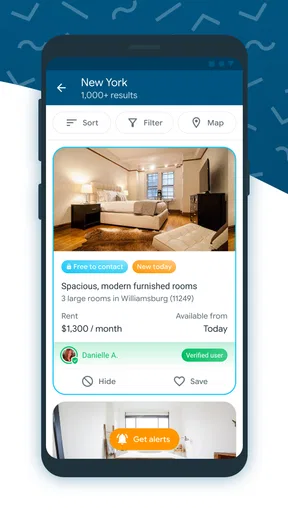
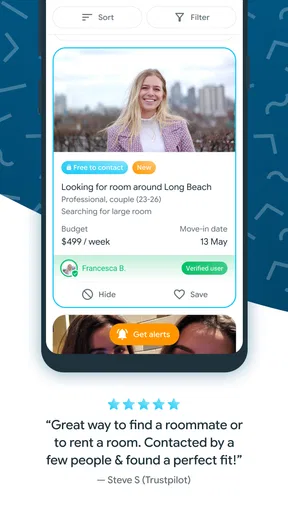
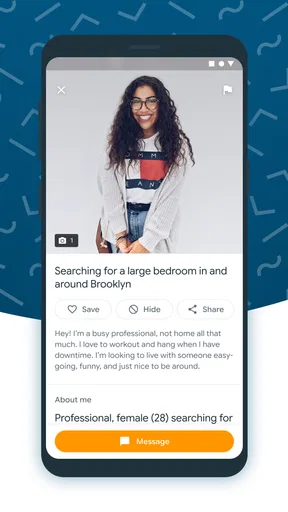
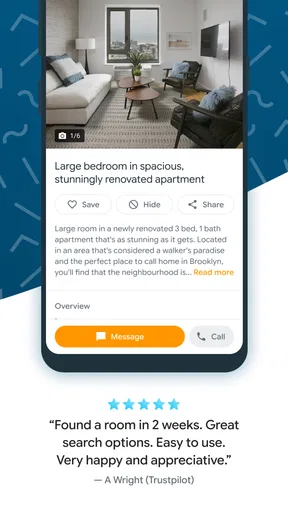
 Analysis by AppCompare
Finding a room is easy to underestimate until you are comparing rent, location, house rules, move-in timing, and the personality of the people already living there. I found SpareRoom US most useful when I treated it less like a quick search box and more like a daily shortlist manager. It is a free lifestyle app from SpareRoom for people looking for roommates, rooms, sublets, and property rentals, with enough choice to make the first week feel productive rather than overwhelming.
The important question, though, is whether it remains useful after the initial burst of searching. My answer is yes, but only for a particular kind of renter: someone willing to check listings regularly, read carefully, and communicate directly. It is not a magic shortcut to a perfect home. It is a practical marketplace that rewards patience and a clear idea of what you will and will not accept.
What the first week feels like
My first impression was that the app makes the search feel more immediate than browsing broad real-estate websites. The focus is clearly on shared living and flexible rental situations, so the results feel closer to the problem a renter actually has when a full apartment is too expensive, unavailable, or unnecessary. That focus is the first major advantage over general property apps.
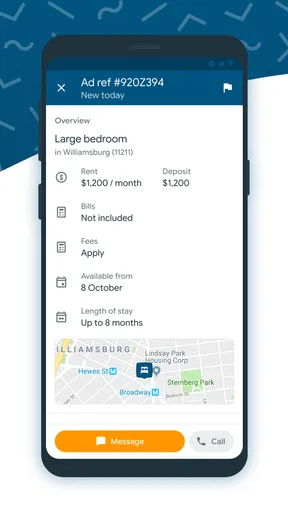
The basic workflow is familiar: search for a suitable room or rental, inspect the details, and decide whether the listing deserves a message. The real work starts after the search results appear. A room that looks affordable may have a location that changes the commute completely. A promising sublet may suit someone with a short timeline but be a poor match for a person seeking a stable home. I quickly learned that the app is best used to narrow possibilities, not to make the decision for me.
My most useful first-week habit was creating a personal comparison method before contacting anyone. I looked at the total monthly cost, the likely commute, the stated household expectations, the availability date, and whether the description answered basic questions. This prevented me from spending time on listings that were attractive only because of one strong detail, such as a low advertised rent.
That approach also exposes one of the app’s limitations. A marketplace can show you many opportunities, but the quality of the experience depends heavily on how clearly each person writes and updates their listing. Some posts may give enough context to understand the household immediately, while others require several messages before you know whether the arrangement is realistic. SpareRoom US helps you discover options; it does not remove the need for judgment.
Why shared housing feels more natural here
Compared with a conventional apartment-search service, the app puts more attention on the human side of renting. You are not only choosing a number of bedrooms or a neighborhood. You are considering whether you can live with the existing household, whether the room is furnished or suitable for your routine, and whether the arrangement feels temporary or ongoing.
Worth Reading Before You Choose

EA SPORTS FC Mobile 26 Is a Bigger Football Game, but It Takes Time

Flipboard Shows What News Apps Must Do Beyond the Feed

Switching to Android Auto Means Rethinking Your Driving Routine

Google Calendar Makes a Crowded Week Easier to Manage

Ludo King Makes the Most of the Minutes Between Plans

Baby Panda World Brings Quick Play to Modern Phones, but Its Game Library Feels Busy
That makes it especially helpful for newcomers to a city, people between homes, students and workers who do not want a full lease, or renters who need a room rather than an entire property. It can also be useful for someone who has a spare room and wants to find a roommate instead of advertising through a broad housing channel.
I would not use it as my only source if I needed a very specific conventional rental with formal building information, extensive market comparisons, or a standardized application process. General real-estate platforms can be stronger for entire apartments and professionally managed properties. SpareRoom US earns its place when the shared-living relationship is central to the decision.
Making the initial search less wasteful
During the first week, I would resist the temptation to contact every listing that looks vaguely suitable. A better workflow is to search broadly once, remove anything that fails on location or budget, then read the remaining descriptions as if they were a first interview. Look for practical clues: how the household describes quiet hours, guests, cleaning, work schedules, storage, and the expected length of stay.
Descriptions that mention everyday routines often tell me more than polished photographs. A room can be attractive, but the surrounding household may be a poor fit if the renter works nights, needs a quiet place to study, or spends most evenings at home. This is one of the less obvious strengths of a room-focused service: it encourages me to evaluate compatibility earlier than I might on a standard property site.
I also found it useful to keep a small private record of listings I had already considered. Without that discipline, repeated browsing can blur together and make the same room seem new after a few days. The app can support discovery, but the organization of the search still belongs to the user.
Why it can remain useful month after month
The lasting value of SpareRoom US comes from changing circumstances. A renter may begin by looking for a short sublet, then decide to stay longer. Someone may need a room quickly after relocating and later want a better commute. An existing housemate may move out, turning the user from a seeker into someone trying to fill a room. Because the app covers several forms of shared rental activity, it can remain relevant beyond one search.
Its current version is 3.1.3430, and the app has been available since September 21, 2016. Those details matter less than the practical result: this is not a novelty built around a single rental trend. It has had time to become a recognizable tool for a recurring housing task. The audience is also substantial, with more than 500 thousand installs, while its average rating is 4.3 from roughly 3 thousand ratings. I read that as evidence of a generally positive experience, but not a promise that every listing or conversation will be smooth.
The app is free to install, which makes repeated checking easy to justify. That matters in rental searches because the best opportunity may not appear on the day you begin looking. A low-friction app is more valuable when you can return to it during lunch, after work, or while waiting for a reply without feeling that every visit carries a cost.
There are in-app purchases ranging from about ten dollars to around two hundred dollars per item. That is an important part of the long-term picture. A casual renter can begin without paying, but users should understand that some optional paid choices may affect how they approach the marketplace. I would not spend money simply to make a stressful search feel more urgent. I would first learn what the free experience provides and decide whether a paid option solves a clear problem for my particular situation.
A routine that prevents the search from taking over
Long-term usefulness depends on maintenance. I would check new listings at planned times rather than refreshing constantly. A short, focused session lets me compare opportunities while preserving energy for the parts that matter more, such as arranging a viewing, preparing questions, and checking the address independently.
When I found a promising room, I would keep the conversation specific. Instead of sending a vague request, I would briefly explain my intended move-in timing, work or study routine, preferred length of stay, and any non-negotiable requirement. This makes it easier for the other person to decide whether a conversation is worthwhile and reduces the back-and-forth that can make rental searches exhausting.
Another useful habit is to close the loop on old possibilities. I would mark down which listings had replied, which were unavailable, and which raised concerns. That may sound mundane, but it prevents a common failure in housing searches: repeatedly revisiting a listing because it still looks good while forgetting why it was rejected earlier.
For people offering a room, the maintenance burden is different. The app can help bring potential roommates into view, but the user still needs to keep the description accurate, respond promptly, and remove or update a post when the room is no longer available. A stale listing damages trust and wastes everyone’s time. The tool is only as current as the person managing the information.
Where recurring value becomes less obvious
The app is strongest when the user has flexibility. If I can consider several neighborhoods, a range of move-in dates, or both rooms and sublets, the search has room to work. If I need one exact block, one exact date, and a highly specific arrangement, the number of useful results may shrink quickly.
It is also less compelling for people who already have access to a trusted local network. A friend’s recommendation, a university housing office, or a workplace community may provide more context and accountability than an open marketplace. SpareRoom US is valuable when I need to widen the search, not necessarily when my personal network has already produced a safe and suitable option.
There is a trade-off between choice and effort. More listings can improve the chance of finding a good match, but they also create more reading, more messages, and more decisions. I would call this productive friction rather than a flaw, because shared housing deserves scrutiny. Still, anyone hoping for a fast, nearly automatic match may become frustrated.
The maintenance burden and the fatigue it creates
The biggest ongoing cost is attention. Searching for a room is not a task I can complete by looking at a few photos. I need to verify the practical details, ask questions, compare replies, and decide whether an in-person visit is appropriate. The app brings these possibilities together, but it cannot replace the work of checking them.
Repeated browsing can also make listings feel interchangeable. After several sessions, I found myself remembering the rent but forgetting the household details, or remembering a nice room while losing track of its commute. This is why a simple note-taking system is more valuable than endless scrolling. I would record the address area, expected costs, move-in timing, household rules, and my reason for keeping or rejecting the listing.
Communication can become another source of fatigue. Some people answer quickly and clearly; others leave important questions unresolved. A useful rule is to treat evasiveness as information. If a listing does not clarify basic arrangements after a polite, direct question, I would not keep investing time merely because the room looks inexpensive.
Safety deserves a calm but serious place in the process. I would avoid sending money before understanding who I am dealing with and what exactly is being offered. I would arrange appropriate viewings, tell someone where I am going, and avoid letting urgency override common sense. These are not special features of the app; they are responsibilities that come with any housing marketplace. The convenience of finding a room should never be confused with proof that a particular offer is reliable.
When the alternatives are better
For a full apartment, I might prefer a traditional property platform with more emphasis on buildings, agents, lease terms, and standardized application details. For a short emergency stay, a furnished accommodation service may provide a more predictable booking process. For students or people moving for work, a local group or institutional housing board may offer stronger community context.
SpareRoom US is the better choice when I care about the relationship inside the home and need to see rooms, roommates, and sublets in one focused place. It is especially suited to flexible renters who can evaluate several arrangements rather than insisting on a single property type. The wrong choice would be to expect it to behave like a fully managed rental agency.
The age rating is Teen, and the app runs on operating systems version 10 or later. That makes it accessible to a broad range of mobile users, but accessibility should not be mistaken for suitability for every renter. A younger user may still need help understanding leases, deposits, household responsibilities, and personal safety. The app can support the search; it cannot provide the life experience needed to evaluate every agreement.
My long-term verdict
After the novelty fades, SpareRoom US earns lasting space on my phone if I am actively navigating shared housing or expect that need to return. Its value is recurring rather than spectacular: it gives me a focused place to look, compare, contact, and revisit possibilities without paying to begin. The app is at its best when I use it as a disciplined search tool instead of treating it as a stream of instant solutions.
I would recommend it to renters who want a room, roommate, sublet, or flexible property arrangement and who are prepared to do careful follow-up. I would also recommend it to someone offering a spare room who wants access to people specifically looking for shared accommodation. The focused audience is more useful here than a generic collection of property listings.
I would skip it, or use it only alongside another service, if I needed a professionally managed apartment, a highly standardized application, or a guaranteed short-term booking. I would also avoid making it my sole option if my search had strict requirements that left little room for compromise. In those cases, a specialist alternative may save time and reduce uncertainty.
The app’s free entry point, established presence, and generally strong user response make it easy to try. Its paid items mean I would approach optional spending carefully, especially before I understand how well the ordinary search fits my needs. My final judgment is straightforward: SpareRoom US is worth keeping when your housing problem is fundamentally about finding the right shared arrangement, not merely locating any available property.
That distinction is what gives it staying power. It does not eliminate the tiring parts of renting, and it cannot guarantee that a promising listing will become a good home. What it does provide is a focused starting point and a practical way to keep searching as your circumstances change. Used with clear criteria, organized notes, and sensible caution, it can remain useful well beyond the first week.
Pros
- Large selection of rooms and roommates across major US cities.
- Detailed profiles help compare budgets
- neighborhoods
- and living preferences.
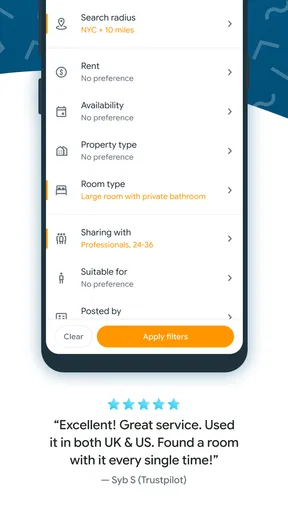
- Search filters make it easier to narrow listings by location and price.
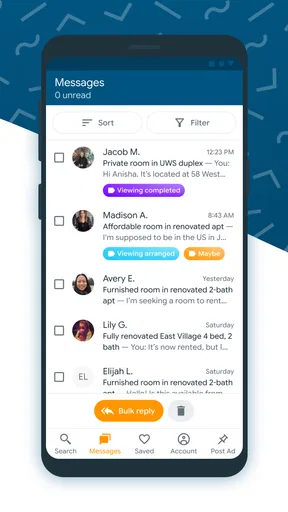
- Direct messaging lets users contact advertisers before arranging a viewing.
- Useful for finding short-term
- furnished
- and roommate-share options.
Cons
- Listing quality can vary
- so some posts may be outdated or incomplete.
- Popular rooms may receive many replies and disappear quickly.
- Some advertisers may request extra screening before sharing full details.
- Premium features or visibility boosts may require an additional payment.
- Users must independently verify listings and watch for potential rental scams.
FAQs for SpareRoom US
What is SpareRoom US, and who is it designed for?
SpareRoom US is a housing and roommate-finding app focused on helping people search for available rooms, roommates, and shared homes. It can be useful for students, professionals, people relocating to a new city, and anyone looking for a more affordable alternative to renting an entire apartment. Listings generally include details about the location, rent, household preferences, and move-in arrangements.
How do I search for a room or roommate on SpareRoom US?
After creating an account, you can search by city, neighborhood, ZIP code, or other location criteria and refine results according to your needs. Depending on the listing, you may be able to filter by price range, room type, availability date, and household preferences. It is important to read the full description, review photos carefully, and confirm what is included in the rent before contacting the advertiser.
Is SpareRoom US free to use?
SpareRoom US offers free access to many basic features, including browsing listings and contacting users in situations permitted by the platform. However, some features, visibility options, or communication benefits may depend on the type of account or promotional conditions available at the time. Before paying for any upgrade, check the current pricing, renewal terms, and exactly what additional functionality the subscription provides.
How can I stay safe when using SpareRoom US?
Use the app’s messaging tools initially and avoid sharing sensitive personal information too early. Never send money, deposits, or application fees before independently verifying the property and the person offering it. Arrange viewings in person or through a reliable video call, tell someone where you are going, and be cautious of listings with unusually low prices, urgent payment demands, copied photos, or requests to communicate exclusively outside the platform.
What should I check before agreeing to rent a room through SpareRoom US?
Before making a commitment, confirm the exact monthly rent, security deposit, utilities, lease length, notice requirements, and whether the room is furnished. Ask who manages the property and whether the advertiser has permission to rent the room. You should also discuss house rules, guests, pets, parking, cleaning, and shared spaces. Whenever possible, inspect the property and review a written agreement before paying anything.


